Friday, June 23, 2006

Captain Midnight!


Captain Midnight was a national radio show that ran for ten whole years in the US. Much of the show's lifespan coincided with WWII (fortunately for the show's sponsors, Skelly Oil Company and then later, Ovaltine). These things are hilarious.

You can listen to EVERY SINGLE EPISODE online.

Fantastic.

Monday, June 19, 2006

Mysteries Decoded (part 1)

This is the beginning of a series of short essays I've been throwing around in my head for quite some time. I figured that I might as well use this space to exercise my critical eye - especially since the little snippets and quotations I was posting garnered very little feedback. Yes, this is my writing, as derivative as it may be. I'd appreciate any comments whatsoever - on style and content - and keep in mind that this is part of some larger picture:

------------

Roland Barthes’ essay “The Nautilus and the Drunken Boat” is a wonderful short, critical essay on the work of Jules Verne. The essay is a structuralist analysis of The Mysterious Island, the second and final installment of Captain Nemo’s adventures aboard the Nautilus. With a bit of sarcasm, Barthes calls it an “almost perfect novel,” submitting it as the epitome of a type of childlike delight. The most interesting aspect of Barthes’ criticism, however, is the fact that the subject of his essays is never the real topic of discussion. Rather than merely cast judgment on Verne’s credibility as an author, Barthes resuscitates Verne as a symptom of larger cultural epoch.

The Nautilus comes to signify an infantile desire for the finite. He writes:

Ships in Jules Verne are perfect cubby-holes, and the vastness of their circumnavigation further increases the bliss of their closure… The Nautilus, in this regard is the most desirable of all caves: the enjoyment of being enclosed reaches its paroxysm when from the bosom of this unbroken inwardness, it is possible to watch, through a large window-pane, the outside vagueness of the waters, and thus define, in a single act, the inside by means of its opposite.
The Nautilus is the ultimate exploration vessel. The ship represents the technological impalement of nature. The threat of the unknown is neutralized via cartography - the determined classification of each and every hidden crevasse of the earth. We emphasize the dual idea of penetration and enclosure with some risk. A knowable universe would indeed constitute a return to the womb, but the intention here is not to diagnose Verne with some sort of private neurosis. More specific than any thesis of human nature, the Nautilus characterizes a lingering, yet transformed, Enlightment ideology that quite possibly continues to this day. The mold should be quite familiar still: an insatiable thirst for quick answers, for mysteries solved with theatrical flair and conclusiveness, all wrapped up into a rapidly consumable package.

Saturday, June 17, 2006

On the Bandwagon

Sharing music? Count me in.

I don't have much to offer, but this guy - Daedelus - I absolutely love. If you like experimental or acid jazz, check this out:

Daedelus - Denies the Day's Demise
Also: Daedelus on MySpace

As noted by my fellow compatriots, I own this CD as well as any other album posted on this page.

Spread the disease. Enjoy.

Wednesday, May 17, 2006

Nicotine-Be-Gone


School's out; people have lot's of shit on their plate it seems. Death and destruction.

Sorry about your buddy, David: it must feel terrible.

I'm on the Patch now. Chewing gum and chugging bottled water. Sick to my stomach. Insomnia. ...Awesome.

Marie is out-of-town, so I'm trying to keep myself busy and distracted. Reading intensely. Writing and drawing too. Might even have my own artwork to post this summer.

Stay in touch.

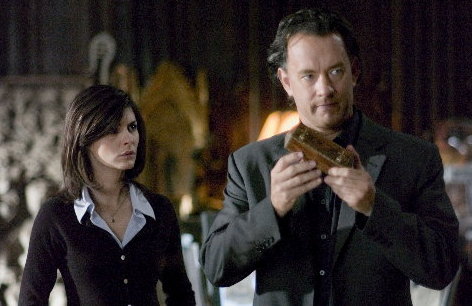
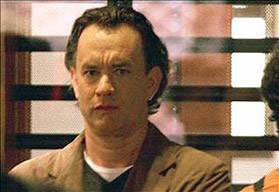
Count the Days: foolish-movie-event of the year


(also known as "Tom Hanks Looks Perplexed Over and Over Again")

Critics say:
Tom Hanks was a zombie. Thank goodness for Ian McKellen. It was overplayed, there was too much music and it was much too grandiose.
I'm very interested.

Thursday, May 04, 2006

Pynchon on Sloth

From Thomas Pynchon's "Nearer, My Couch, to Thee," an excellent short history of Sloth

(as in the-seven-deadly entropic-or; the "cathode-anode serenity found in the pure, informationless state of signal zero" . . .) :

Sitting there on some medieval death row, going, "So, look, no offense, but what'd they pop you for anyway?"
"Ah, usual story, they came around at the wrong time of day, I end up taking out half of some sheriff's unit with my two-cubit crossbow, firing three-quarter-inch bolts on auto feed. Anger, I guess.... How about you?"
"Um, well ... it wasn't anger...."
"Ha! Another one of these Sloth cases, right?"
". . fact, it wasn't even me."
"Never is, slugger -- say, look, it's almost time for lunch. You wouldn't happen to be a writer, by any chance?"

In his classical discussion of the subject in the "Summa Theologica," Aquinas termed Sloth, or acedia, one of the seven capital sins. He said he was using "capital" to mean "primary" or "at the head of" because such sins gave rise to others, but there was an additional and darker sense resonating luridly just beneath and not hurting the power of his argument, for the word also meant "deserving of capital punishment." Hence the equivalent term "mortal," as well as the punchier English "deadly."

Philadelphia, by Franklin's time, answered less and less to the religious vision that William Penn had started off with. The city was becoming a kind of high-output machine, materials and labor going in, goods and services coming out, traffic inside flowing briskly about a grid of regular city blocks. The urban mazework of London, leading into ambiguities and indeed evils, was here all rectified, orthogonal. (Dickens, visiting in 1842, remarked, "After walking about in it for an hour or two, I felt that I would have given the world for a crooked street.")

Any discussion of Sloth in the present day is of course incomplete without considering television, with its gifts of paralysis, along with its creature and symbiont, the notorious Couch Potato. Tales spun in idleness find us Tubeside, supine, chiropractic fodder, sucking it all in, re-enacting in reverse the transaction between dream and revenue that brought these colored shadows here to begin with so that we might feed, uncritically, committing the six other deadly sins in parallel, eating too much, envying the celebrated, coveting merchandise, lusting after images, angry at the news, perversely proud of whatever distance we may enjoy between our couches and what appears on the screen.

Poems from the Machine

Some verse I "created" with the aid of William S Burroughs-Arthur Rimbaud poetry generator.

---------------------

He faces the horizons in the shadowy glade where
A little wild ray of light gods who bit mankind sucked joyfully;
pours burning love the devil's paladins;
like dragonflies threading! when the sap of the world!

basement rent blackberry; kiwi angels faded hypnotized; honeydew candlelight mermaids; darkorchid frosty storm drain

Vision of her big breasts the hidden window.
- like an organ of iron, down the long black river.
For these cracked brains dropping pollen like commas.
- nubile and full-blooded through this horror of space.

storm drain lavenderblush flows seagreen coughing sepia rainbow

And faces the horizons, in the shadowy glade where
at her blessed nipple at times she rouses
on their pale vertebrae: organ-pipes;

Nailing them naked to coloured,
i should rudder and anchor,clamouring birds seen archipelagos of and of singing phosphorus
drowned men sank, down into abysses

Wiki

Lil' Bro, Jon Carll, wrote this little homage biography and posted it on Wikipedia. It should stay there for most of the day. Thanks Jon.

Your continued donations keep Wikipedia running!
Jeremy eugene abernathy
From Wikipedia, the free encyclopedia
Jump to: navigation, search

Humanities student, artist, aesthete and dungeonmaster extraordinaire, Jeremy Eugene Abernathy will have graduated from Oglethorpe Univesity on May 13, 2006 with a BA in _________. Born and raised in Tuppalo, Mississippi, the birthplace of Elvis Presley, Jeremy combines his down-home southern roots with a cosmopolitanism born of constant reading and extensive travel. His wide academic interests encompass art, religion, literature and symoblism. Recent studies include Jung, Freud, Batailles, and an honors thesis on the works of Haruki Murakami.
This bright and promising young man worked hard to support himself while taking a full courseload at Oglethorpe. He has been gainfully employed as an art gallery sales associate, a superhero (normally spiderman) at children's parties, and as an English language instructor in Japan. Presently the Atlanta resident works as a framer of pictures at Binders Art Supply store and plans to continue working there for the summer. His other summer plans include a trip with his father to Thailand, delving into the works of Joyce, and getting "drunk as fuck!"
Jeremy Eugene Abernathy proposed to Marie Sutherland Lawless in early 2006. They are engaged to be married on the 21st of April, 2007 at 12:00 pm. Her "rock" is enormous.

Retrieved from "http://en.wikipedia.org/wiki/Jeremy_eugene_abernathy"

Tuesday, May 02, 2006

Japanese Orpheuse: Myth, Modernity, and the Unconscious in Murakami

This is the presentation I gave at the symposium. I know that only a few people were able to come (sorry I couldn't do likewise), but here is the script. This damn thesis was a lot of work, and now I'm finished. Whenever you guys get time, please take a look and tell me what you think:

--------------------------------

Haruki Murakami, or in Japanese Murakami Haruki, is a living, contemporary Japanese novelist. Some titles of Murakami stories:
the novel sekai no owari to haadoboirudo wandarando (Hard-boiled Wonderland and the End of the World);
hitsuji o meguru booken (A Wild Sheep Chase) ;
or the short story with one of his longest titles, “Airplane – or How he Talked to Himself as if Reading Poetry.”

Trust me, the titles sound just as ridiculous in Japanese as they do in English.

I suppose that I have inherited Murakami’s habit for long ridiculous titles. Modernity? Myth? The Unconscious? Japanese Orpheus? How do all these things go together? I promise to deliver answers to these questions, but in doing so, I may have to lengthen the title of my paper. For what began with The Wind-up Bird Chronicle, Murakami’s most difficult novel, turned into an struggle to tie together Murakami’s earlier and later work along with Japanese myth, and solve certain local problems in my chosen methodology: Jungian psychoanalysis. We could call it “How the Wind-up Bird Chronicle sent me on A Wild Sheep Chase.”

I thought I’d begin with some biographical information, but I think I’d rather let the author speak for himself – quote:


The world of literature is probably 85 percent feeling and desire, things that transcend differences of race or language or gender … I suspect that when people say “There’s no way an American can understand Japanese literature”, they’re just revealing a complex. It’s my belief that Japanese literature has to open itself much more broadly than it does now to the scrutiny of the world at large.
In Murakami there are no kimonos or samurai swords or even kamakazi pilots. His Tokyo is the Tokyo of today: popmusic and mass-media; Sony executives and Ginza call-girls; everybody, even grandma’s riding bicycle; Japanese teenagers working part-time at Disneyland or at the local Kentucky Fried Chicken. Murakami is a writer of the global era for the global era.

Today I will:
1) review some of Murakami’s early work, namely the short story entitled “The Dancing Dwarf”
2) introduce the methods of Jungian psychology, and…
3)
comment briefly on The Wind-up Bird Chronicle and Murakami’s role in contemporary world literature.

The Dancing Dwarf: just a warning, “The Dancing Dwarf” (or odori kobito) is probably Murakami’s most fantastic story.

“The Dancing Dwarf” begins with the words:


A dwarf came into my dream and asked me to dance.I knew this was a dream, but I was just as tired in my dream as in real life at the time. So, very politely, I declined. The Dwarf was not offended but danced alone instead.


Old records are scattered around the room, and the dwarf performs a frenzied jig to the an odd musical assortment on a portable record playter: Glenn Miller, the Rolling Stones, and Great Selections for the Classical Guitar. The narrator insists that this is a dream. The dream ends and the narrator returns to what we assume is a normal, intelligible reality:


I washed my face with great care, shaved, put some bread in the toaster, and boiled water for coffee. I fed the cat, changed its litter, put on a necktie, and tied my shoes. Then I took a bus to the elephant factory.
The Elephant Factory? The sudden turnabout makes us pause in disbelief. Reality and dream have suddenly traded places, juxtaposed in magical confusion. Our nameless hero really does work at an “elephant factory” where living elephants are literally mass-produced through detailed industrial process:


We don’t make elephants from nothing, of course. Properly speaking, we reconstitute them. First we saw a single elephant into six distinct parts: ears trunk head abdomen, legs, and tail. These we then recombine to make five elephants, which means that each new elephant is in fact only one-fifth genuine and four fifths imitation. This is not obvious to the naked eye, nor is the elephant itself aware of it. We’re that good.

What?

Let’s pause for a moment to discuss Murakami’s style. Three important considerations:

1) automatic writing – Murakami does not plan his stories in a traditional way; he writes things as they come. He describes writing as a very physical process, since writing this way is very difficult.
2) frame narrative – Murakami uses and abuses multi-linear storytelling techniques, by introducing newspaper clippings, stories the narrator hears second-hand, and, above all, dreams. Murakami creates several interweaving “rivers of narrative.”
3) Magical Realism – Murakami’s writing genre is called “magical realism,” the most famous example of which is Garcia Marquez. By Mixing a very realistic and detailed, everyday world with the magical, Murakami begins with a very believable story, and makes it impossibly absurd, or at times, sinister – a moment Freud calls the “Uncanny” or in Lacan, the Real.

A short summary: the dancing dwarf appears to the narrator in a dream. Somehow the young man’s dream coincides with reality. The narrator becomes interested with a mysterous new girl at the factory, and he goes to ask her out. She will only give him a date, if, coincidentally, he can impress her with his dancing. The dwarf appears to him in one more dream. He offers a bargain, “I’ll make you a deal. If I enter your body, you’ll become the best dancer in the world. That way you’ll be able to seduce her, or anyone for that matter. But whatever you do, you can’t say a word. If you do, then your body is mine, forever.” The young man agrees to the bargain. He goes to the dance hall and is finally able to impress the new girl. The whole time, he manages to get by without saying as much as a word. The story ends, and I won’t say how exactly, with the image of the new girls’ corpes, decomposed and covered with maggots. The narrator magically brings her back to life.

The Jungian method in literature, based in the theories of psychologist Carl Jung, is a mostly synchronic, comparative technique that uses motifs from world mythology. These lietmotifs are called archetypes, or “eternal symbols.” Archetypes are related to the unconscious and, more specifically, a theory of the mind called the collective unconsious. By treating the story as if it were a dream, we raise the elements to the same plane of time and examine the structural interactions, disregarding the elements’ chronological place in the narrative.

I my paper, I compare “The Dancing Dwarf” to two ancient Japanese stories, the fairytale called “Urashima Taro” and the story of Izanami and Izanagi from the Japanese creation myth. The legend of Izanami and Izanagi is from the Kojiki, the Japanese “record of ancient matters.”

Izanagi and Izanami are the first parents in Japanese myth. The goddess Izanami gives birth to everything in the world. Finally, by giving birth to fire, she is burned and dies. Her husband, Izanagi, laments and visits the underworld to find his dead wife. She asks him to wait, saying “Whatever you do, don’t look at me.” It is completely dark, so he can see nothing. However, the god cannot wait any longer and makes a fire. He sees his wife in a terrible state of disintegration; maggots are squirming and roaring on the corpse. Hereupon he is awestruck and flees. The goddess says, “He has shamed me!” and pursues him with the hags of the underworld.

The legend is related to the Sumerian myth of Ishtar and the Greek myth of Orpheus.

Returning to the “The Dancing Dwarf:” The plot is essentially driven forward by a simultaneous, dialectical conflict with the narrator’s shadow alter-ego, the dwarf, and with the femine Other. As in the tale of Urashima, the hero must leave his everyday world to meet with the mysterious female. The common motif is the motif of two parallel worlds: the underworld or the nighttime world of dream and the unconsious, and the daytime world of everyday life. In most ways, we can consider “The Dancing Dwarf,” structurally, as a microcosm of Murakami’s major works. Because of its mythological structure, and since, like much of Murakami’s fiction, it parodies or inverses the logic of modern concepts such as linear time, the division between wakefulness and dream, and industrial mass-production - I call “The Dancing Dwarf” a “postmodern fairytale.”

------------
When using the Jungian method in my research, a couple of difficulties surfaced.

1) How can a symbol both universal and particular at the same time, that is, archetypal and have a specific function in Japanese literature?
2) In reference to Murakami, what is it about the unconsious that makes it so
collective?

With those questions in mind, we turn to The Wind-up Bird Chronicle. Like most of Murakami’s long fiction, the story centers on a middle-aged Tokyo man who works at a boring dead-end job, and who suddenly wanders into an absolutely strange world outside of his own. The book is Murakami’s most ambitious work, combining several epic rivers of narrative. I follow a scholar named Matthew Stretcher in summarizing these various rivers into 3 simultaneous narratives:

1. A protagonist named Toru in search of his lost wife, Kumiko
2. A mother and son team, named “Nutmeg” and “Cinnimon,” who run a clinic for alternative healing
3. the historical chronicle of wartime Japan – events leading up to the World War.

Like the other stories, The Wind-up Bird Chronicle operates on the principle of ego and alter-ego. For example, I make the argument that all the main female characters may actually be the same woman, Kumiko, reincarnated if you will, behind a carnival of doppelganger masque. In order to find Kumiko, Toru navigates these various doppelganger personalities including one of his own, in what resembles an archetypal quest: like that of Orpheus or as in our Japanese myth of Izanagi.

Today, I’m mostly concerned with the connection between the stories in modern-day Tokyo and the accounts of the Japanese occupation of China during the Sino-Japanese War. A passage from Narrative 3:

[long quotation involving Japanese soldiers stationed at a Zoo. They have to “liquidate” some tigers, much like later, they have to execute some Chinese students.]


3 narratives, covering 2 distinct historical periods, united by one image: the image of the well, a tunnel into the unconsious. What makes the unconscious so collective in the Wind-up Bird Chronicle is this memory of history and violence that each of us, Japanese or otherwise, must come to face.


Sunday, April 30, 2006

Net Radio

Soma FM: currently my favorite radio station . Lot's of good ambient, good variety. Definitely thumbs up. Try "Cliquehop" and "Beat Blender."
(the bit-rate on campus usually sucks, but it's worth a try, I promise. You can access Soma on iTunes as well.)

Radio Io: one of the more consistent radio stations. good selections of imports - give it a try. (the commercials are bad ... just turn down the dial)

ioBeat - house music, ambient, etc. (usually better at night)

ioEdge - also very good. indie rock, new music, etc.

Any recommendations?

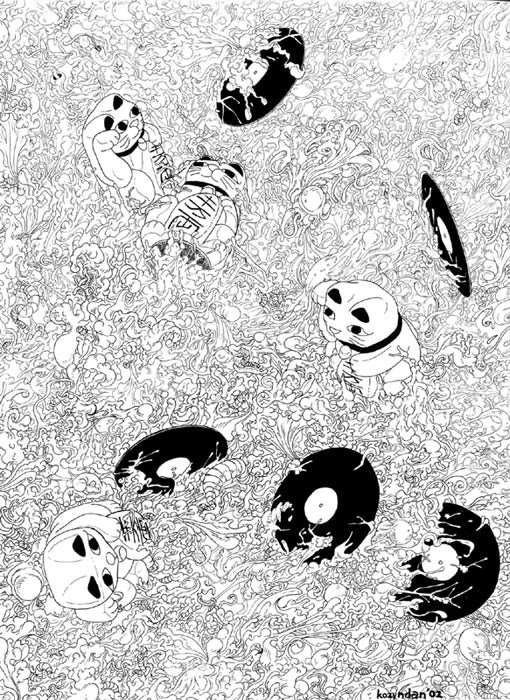
Album Covers, Satire, Trans-Pacific Dissonance


More at Kozyndan dot com

Film 101: the Cinema is a Black Mass

Some poison-enveloped candy, via literary critic Walter Benjamin,

"Art in the Age of Mechanical Reproduction:"

Thanks to the camera, therefore, the individual perceptions of the psychotic or the dreamer can be appropriated by collective perception. The ancient truth expressed by Heraclitus, that those who awake have a world in common while each sleeper has a world of his own has been invalidated by film – and less by depicting the dream world itself than by creating figures of collective dream such as the globe-encircling Mickey Mouse.

The representation of human beings by means of an apparatus has made possible a highly productive use of the human being’s self-alienation … Not only does the cult of the movie star which it fosters preserve that magic of the personality which has long been no more than the putrid magic of its own commodity character, but its counterpart, the cult of the audience, reinforces the corruption by which fascism is seeking to supplant the class consciousness of the masses.

All this in order to distort and corrupt the original and justified interest of the masses in film – an interest in understanding themselves and therefore their class. Thus, the same is true of film capital in particular as of fascism in general: a compelling urge toward new social opportunities is being clandestinely exploited in the interests of a property-owning minority.


Working on my Modern Art final as well as my Aesthetics paper, Benjamin and Deleuze in-hand. Seriously though, Benjamin is an incredibly lucid thinker - beautiful and dead-on-target with his assessments of politics, art, and the commercial age. He died in 1940 - and he achieved so much. I'm amazed.

Max Ernst


(Click that last thumbnail)

Georges Bataille on Max Ernst:

What is the foundation of the turbulent and violent world of Max Ernst if no the catastrophic substitution of a game, of an end in itself, for the laborious work with a view to a desired result? The serious philosopher conceives philosophy as a laborious activity and in so doing he imitates carpenters and locksmiths ... He constructs his philosophical furniture, a well-oiled philosophy responding as a lock does to the key made for it. The person who recognizes the powerlessness of work, on the contrary is dazzled and fascinated by the play which serves no purpose.

If he announces, if he calls for, the death of philosophy, the philosopher who plays sees in him a brother, Max Ernst. Next to this friend he accepts being swallowed up in this collapse of the real, in which death, half-glimpsed, compellingly represents the decisive move, in which the world, as it ceases to exist, falls apart; where thought is only the measureless applause given to the death of thought.

Sunday, April 09, 2006

Faulkner

On of my favorite Faulkner moments - the prisoner, stalking for alligators (the Cajun with him) lost in forgotten Mississippi-Louisiana swamp, somewhere in the flood-sunken abyss below Vicksburg. From If I Forget Thee, Jerusalem [The Wild Palms]:

Doubtless he did not know himself how it happened, what was happening. But he doubtless remembered it (but quietly above the thick) rich-colored pristine cigar in his clean steady hand) what he knew, divined of it. It would be evening, the ninth evening, he and the woman on either side of their host's empty place at the evening meal, hearing the voices from without but no ceasing to eat, still chewing steadily, because it would be the same as though he were seeing them anyway - the two or three or four pirogues floating on the dark water beneath the platform on which the host stood, the voices gobbling and jabbering, incomprehensible and filled not with alarm and not exactly with rage or even perhaps absolute surprise but rather just cacophony like those of disturbed fowl, he (the convict) not ceasing to chew but just looking up quietly and maybe without a great deal of interrogation or surprise too as the Cajun burst in and stood before them, wild-faced, glaring his blackened teeth gaped against the the inky orifice of his distended mouth, watching (the convict) while the Cajun went through his violent pantomime of violent evacuation, ejection, scooping something invisible into his arms and hurling it out and downward and in the instant of completing the gesture changing from instigator to victim of that which he had set into pantomimic motion, clasping his head and, bowed over and not otherwise moving, seeming to be swept on and away before it, braying "Boom! Boom! Boom!", the convict watching him, his jaw not chewing now, though for just that moment, What? What is it he is trying to tell me? thinking (this a flash too, since he could not have expressed this, and hence did not even know that he had ever thought it) that though his life had been cast here, circumscribed by this environment, accepted by this environment and accepting it in turn (and he had done well here - this quietly, soberly indeed, if he had been able to phrase it, think of it instead of merely knowing it - better than he had ever done, who had not even known until now how good work, making money, could be) yet it was not his life, he still and could ever be no more than the water bug upon the surface of the pond, the blumbless and lurking depths of which he would never know, his only contact with it being the instants when on lonely and glaring mudspits under the pitiless sun amphitheatred by his motionless and rivetted semicircle of watching pirogues, he accepted the gambit which he had not elected, entered the lashing radius of the armed tail and beat at the thrashing and hissing head with his lightwood club, or this failing, embraced without hesitation the armored body itself with the frail web of flesh and bone in which he walked and lived and sought the raging life with an eight-inch knife-blade.

One paragraph: three sentences. Also, Faulkner never actually uses the word 'alligator.'

Wednesday, April 05, 2006

April

Gravity's Rainbow - have copy. Prose like ribbons of Stygian glee, riddled with machine gun fire. The magazine drops, metallic echoes of warfare: the Art of angels.

A: There is no more class.
Q: What about reading?
A: No, none of that. Save what pleases.
Q: Thesis?
A: You know what to do.

Sunday, April 02, 2006

Roland Barthes: Operation Margarine?

Since myth is a type of speech, everything can be a myth provided it is conveyed by a discourse. Everything can be a myth? Yes, I believe this, for the universe is infinitely fertile in suggestions.

Einstein's brain is a mythical object. Paradoxically, the more the genius of the man was materialized under the guise of his brain, the more the product of his inventiveness came to acquire a magical dimension, and gave a new incarnation to the old esoteric image of a science entirely contained in a few letters: E=mc2. There is a single secret to the world, and this secret is held in one word; the universe is a safe of which humanity seeks the combination: Einstein almost found it, this is the myth of Einstein. In it, we find all the Gnostic themes: the unity of nature, the ideal possibility of a fundamental reduction of the world, the unfastening power of the word, the age-old struggle between a secret and an utterance, the idea that total knowledge can only be discovered all at once, like a lock which suddenly opens after a thousand unsuccessful attempts.

Actually, like all resilient totems, wine supports a varied mythology which does not trouble about contradictions. This galvanic substance is always considered, for instance as the most efficient of thirst-quenchers, or at least this serves as the major alibi for its consumption ('It's thirsty weather'). In its red form, it has blood, the dense and vital fluid, as a very old hypo-stasis. This is because in fact its humoral form matters little; it is above all a converting substance, capable of reversing situations and states, and of extracting from objects their opposites - for instance, making a weak man strong or a silent one talkative. Hence its old alchemical heredity, its philosophical power to transmute and create ex nihilo.

Myth is a language that does not want to die: it wrests from the meanings which give it its sustenance an insidious, degraded survival, it provokes in them an artificial reprieve in which it settles comfortably, it turns them into speaking corpses.

Modern poetry always asserts itself as a murder of language, a kind of spatial, tangible analogue of silence. Poetry occupies a position which is the reverse of that of myth: myth is a semiological system which has the pretension of transcending itself into a factual system.

Statistically, myth is on the right … The oppressed is nothing, he has only one language, that of his emancipation; the oppressor is everything, his language is rich, multiform, supple, with all the possible degrees of dignity at its disposal: he has an exclusive right to meta-language.


Also, one very cool Barthes-ism:
“Operation Magarine” - the mystifying device by which political systems inoculate the public with “a touch of evil.” The people are relieved of the system’s greater evils by distraction via the admittance of a lesser evil. For example, perhaps the contemporary debate over stem cell research is a type of ‘operation margarine’: it distracts the public from the real evils of the medical establishment - the all consuming money-bureaucracy that robs control from doctors as well as patients, who are now considered “health consumers” rather than real human beings.

Friday, March 31, 2006

nietzsche

Kennesaw State University fucked me over. They moved the time-slot for my paper, and now I can't even go to the conference. Anyways, I posted my introduction below - and here is another cut-out:

Write with blood: and you will experience that blood is spirit … I hate reading idlers … Another century of readers and the spirit itself will stink.
- the advise of a writer who had already begun to read behind and in-between the lines etched into the history of philosophy, who had the courage and wisdom to radically assert that
The extraordinary courage and wisdom of Kant … has won the most difficult victory, that over the optimistic foundation of logic, which form the underpinnings of our culture.
Kant, we ask? The optimistic champion of logic overturned the foundations of logic? In all seriousness, Nietzsche suggests that the project of reason a priori, pursued to its limit as in the 1st, 2nd, and 3rd Critiques, reinforces the limit of intelligibility. As reason attempts to cross the boundary of this limitation, attempting a discursive theory-of-everything – reason crosses itself.

But science, spurred by its powerful illusion, speeds incessantly toward its limits where its optimism concealed in the essence of logic runs aground. Socratic man comes to gaze into the illuminable ... When he sees here to his horror how logic coils up at these limits and finally bites its own tail.

The cosmic symbolism of music resists any adequate treatment by language, for the simple reason that music, in referring to primordial contradiction and pain, symbolizes a sphere which is both earlier than appearance and beyond it.

We all talk about poetry so abstractly because we are all bad poets. At bottom the aesthetic phenomenon is quite simple: all one needs in order to be a poet is the ability to have a lively action going on begore one continually, to live surrounded by hosts of spirits. To be a dramatist one all one needs is the urge to transform one-self and speak out of strange bodies and souls.


cut my losses

Both the Apollinian and the Dionysian are marked as crossings that move beyond the everyday: to the world of beautiful images over which Apollo presides; or to the self-oblivion of the ecstatic state, as in the descent to Hades, as in crossing, in that direction, the river of Lethe.
-John Sallis, in reference to The Birth of Tragedy

Lethe, the river of forgetting, delineated the ancient boundary between the world of the dead and the world of the living. In fact – fictively speaking – Hades was surrounded by a number of rivers, one of which, the River Styx, famously encircled it nine times over. Lethe was the point of non-crossing, a limit, yet it was also the point of crossing – in short, it was the site a double-going – on both sides of which stand shades, specters, and phantoms.

Aletheia, incidentally, was the Greek word for “truth” – a-lethe-ia: “an un-forgetting.” Heidegger describes aletheia as an “unconcealment.” Truth is the process by which objects appear to us, for in revealing themselves from the concealment of undifferentiated phenomena, appearance-as-such appears in the objects’ revelation.

“Revelation,” a word spoken with its mystical connotation in-tact, is appropriate. By anology we can appropriate Godamer’s aesthetic concept of in-sight: “In order to understand our experience of art, we are tempted to search the depths of mystical language for daring new words like the German Anbild [ in-sight ] – an expression that captures both the image and the viewing of it." One is surprised at the extent to which perception – or an idea of visual re-presentation carried to its mythological extreme – invades every system of communication.

Phantom: from Greek, “to make visible”
Specter: from Latin, “to appear”
Shade: from Old English, “a disembodied spirit; a ghost”
– and in Modern English –
Shade: verb, “to produce gradations of light or color, as in painting”
Shadow: noun, “one who follows, especially in secret” – the assassin has arrived. Already we can hear the echoing footfalls of the double-goer.
Dionysos vs. the Crucified ... (the ellipses mark the struggle about to begin)

Monday, March 27, 2006

the MoMA

I saw a lot of art in NYC. It was wonderful. After so many museums, though, I feel more and more sensitive to the dishonesty of museums.

Two radical thoughts:
1) The museum space is sterile and elitist; it is artificially separated from the real, living world.
2) The movements following art of the 1950's point increasingly towards the death of elitism -- Enter urban graffiti, comic books, collage, and pop art.

Anyways, some new favorites:


Klimt's landscapes - very underrated. must be seen in person.


Kandinsky's early work - a richness totally inspired by Russian fairytales. part of the Symbolist movement.


More Magritte - just call me "Gramaphone Assassin"


Early Cubism - the quality of works by Picasso and Braque is unparalleled. they worked side-by-side, playing off of each other. sometimes they purposely mixed up their paintings to throw people off.


Graffiti artist turned abstract painter - Basquiat.


David Wojnarowicz - absolutely badass. painter / film director. died of AIDS in 1992.


Left: a dream image. novelist Yukio Mishima's face appears at bottom.


... more Wojnarowicz


... and yes, that is a tail-devourer.

Sunday, March 19, 2006

Untitled

When a man buries a pole in the sand,
he automatically creates a sundial and begins to mark time.
To begin marking time is to begin creating a culture.

In the beginning there was Void. The world was cloaked in boundless oceanic darkness penetrated only by the glowing din of scattered, innumerable and unnamed nebulae. Islands of gleaming, radiant antiquity. A wordless, untested rorschach of hoary archaic night.

The first map was not at all of-this-world. The blasphemy of astrological cartography was the invisible connect-the-dot graffiti etched into the otherwise capricious nebulae. Before there were no codices and tomes of charts and tables - no statistical graph-iti - inquiring into the 'reason' of the heavens. The first map was a contract written in blood. What 'real' terrain could astrology claim? To draw the heavens was to inaugrate the extraterrestrial despotism of the stars over the earth.

The philosopher-priest sat watching the shadow of the gnomon, the man-made phallus emerging from the adobe floor. Astronomy existed for centuries, before sundials, through the artifices of this simple device. It was only a stick. But the astrologer, his robes caked with the months of dust, watched the stick with the patience of an ascetic before his god. The span and ebb of the equinox was indicated, prophetically, in the signs and language of shadows. Pythagoras the Magician wanted more.

Gnomon - the "indicator." The signifier.

Babel, Eiffel, the Collosus - all were predestined in the chronomancer's first, archetypal erection. It was a phallus to measure against nature. Men could only ride the bull when they made-believe its testicals were smaller than theirs'.

Already the dramatis personae had appeared. Chronos, Mars, the Pleides - Time, War, and the Seven Sisters. The zodiacal signs weaved the first and eternal narratives in their luminous procreation. Constellations of meaning. Movements of negotiation, struggle - erotic and violent: necessity and purpose spelled with finality in the frost of stellar opalescence. The constellations decided the destiny and doom of every man, woman, and child. The golden threads of necessity were already bound before the first babe cried its dissent.
Why, why, oh why have I been born into a life that has already begun to end?

The heavens return no reply, for their law has already spoken. In dreams we can still the whispering of the daimon, the muse, the alien will of extraterrestrial Idea. The cosmos was a despotism; it was never a democracy.

Then there emerged those heroic ones, the archetypes of anarchy, taking up arms in the gigantomachal war against heaven. Gilgamesh the master of slaves. Pythagoras the magician. Gilgamesh conquered others. Pythagoras conquered himself. And then... there came Socrates, the fateful slayer of magic.

Pythagoras the Ionian trekked to seek the wisdom of all the wizards of antiquity. The hermits-arcane who chose not the wars of men, taking up instead the greater gigantomachy of the stars. He culled their secrets and added them to his own giodesic thaumaturgy of number, sphere, and line: Egyptian necromancy. Persian polito-theurgy. The ecstatic theophanies of the Cretan priestess. He even visited the barbarian shamans of the cold North, learning the indescipherable babble of their runic incantations. It was the age when all of the arts and sciences were considered magic.

Who knows what would have transpired if he had consulted the occult alchemy of the Taoist geomancers. History never recorded the handshake between Pythagoras and the old sage, Lao Tze. Pythagoras extended his hand in partnership. But who would have understood the meaning of this Occidental salute? Lao Tze could only smile and bow in silence. The signs were confused; the distance between the two men grew with the bowing. The East, the true Orient, receded infitely away from Pythagoras' salutory grasp.

The war between Europe and Asia had already begun with the kidnapping of Io, the woman who gave Ionia its name. The children of Gilgamesh had already taken up arms against the children of Herakles. Gemini smiled over the battle between twins. Pythagoras, a true son of Io, would have nothing of it.

Rumors circulated the ancient world: they said that the coffin lids of the pharoahs, the sarcophogae of the skeleton-kings locked away in their cyclopean palace-crypts, were inscripted with maps sufficient for navigating the ways and by-ways of intergalactic currents. Celestial code maps - the secret of magical interstellar travel beyond - transcribed from the last whisperings of cold dying lips. Schematics for dragonboats seaworthy enough for the primordial ocean of night, the "River of Heaven." Just as one could sail the Mediterranean in life, Pythagoras heard, one could sail the Milky Way in death and in mystical un-death.

Pythagoras wondered to himself, pondering the secrets lurking behind the black mirror of the sky ocean...

Friday, March 17, 2006

Sky and Castle

Ben, three paintings by René Magritte:


Castle in the Pyrenees

("Magical Realism")


The False Mirror

(Puts a new spin on "in the eye of the beholder." More like: "In the eye of the beholder beholding this painting beholding you." Or: "In the eye, and only in the eye, beholding-as-such is manifest.

Or yet again: "In the eye of the beholder as it reads 'in the eye of the beholder' typed across the computer screen.)


The Red Model

One of the most impressive Magritte images ever, period. (followed by a period . )

We can re-name it "Shoeless" if we want. Magritte wouldn't care -- Dead men tell no lies. Living ones do.

Magritte was part of the Surrealist movement, but his style has been recently called "magical realism" in order to distinguish his quiet style from the psychedelic movement of Dali. And it's a good call too. Magical realism is a genre that crosses between painting and literature, and given Freudian ideas about the Uncanny, I'd definitely group Magritte into magical realism.

Here's an essay by Fredric Jameson that mentions Magritte, Pynchon, and even Burroughs. I heard him speak at UGA last month. He's a chubby, sweaty scholarly-type that mumbles a lot, but he's definitely brilliant. The talk was basically a narratology and a Post-colonial critique of Aristotle, the Illiad and Odyssey, Livy, Marx, and others.

http://xroads.virginia.edu/~DRBR/JAMESON/jameson.html

August 6, 1945. The Feast of the Transfiguration. Hiroshima

Then a bright cloud appeared overhead, and a voice from the cloud proclaimed, "This is my beloved Son, in whom I am well pleased: hear ye Him."

Not many Japanese writers are willing to address the bomb directly. David's right - the bomb is a 20th century archetype. It has become a powerfully emotional image in the collective unconscious that, for the Japanese, is excessive to linguistic representation.

Ango Sakaguchi on the Tokyo air raids:
(more people died in repeated firebomb attacks in Tokyo than in the one bomb in Hiroshima.)

I truly detest the sight of blood. When I saw a traffic accident occur right before my eyes I immediately turned the other way and fled. But I loved the fantastic destruction that took place in Tokyo. Though I shuddered in fear as the bombs and incendiaries rained down, terrified and panic stricken as the destruction raged, at the same time I felt as though I had never loved or felt such longing for humanity as I did during the firebombing.

I held my ground there in Tokyo, refusing the kindness of a number of people who not only warned me to evacuate, but even tried to offer me places to stay in the countryside. I intended to make my final stand at the burned out air raid shelter of my friend Oi Hirosuke, but after we were separated when he was evacuated to Kyushu and I had lost my best friend in all of Tokyo, all I could do was try to conceal the sound of my breathing in that air raid shelter as I conjured up images of the Americans about to invade at any moment amid the heavy artillery shells exploding all around me. At the time I was calmly resigned to whatever fate awaited me. I thought that I might die, but I believed much more strongly that I would live. Yet to say that I had some kind of vision of how I would manage to come out of the ruins alive would be wrong. There were no thoughts in my mind beyond merely surviving. A miraculous return to life in a world so new and fresh it lay beyond all conception. That was the curious feeling I had; that my entire life would begin anew.

It was for that reason alone that I lived with my cowardly fear as the bombs fell all around me for two hours on the night of April 4, 1945. As tracers lit up the night sky overhead to the brightness of noon, my brother, who had just come to Tokyo, asked me from the air raid shelter if the light was coming from the incendiary bombs. I was so scared that it was all I could do just to tell him that the light was coming from the falling tracers.

Tuesday, March 14, 2006

custom framing

Some random thoughts I had at work today:

For, even when considered as art, framing is a craft that is both art and a commodity. While framing demands a steady hand and a sensitive eye for design, the final demands belong to the customer. The frame shop is a space delineated expressly for the efficiency and accuracy of a careful art. The frame desk, on the other hand, is a rampart set against the invasion of bad taste and common ignorance.

(Negotiating with the public bites ass)

Genuine, local art tends to receive an equally artistic and idiosyncratic framing. The wider bulk of business, however, comes in the form of poster-print reproductions or watercolors painted by the young children of rich, idle housewives.

The Wizard is a computerized mat-cutter; a machine that alleviates the framer from expending time and thought. The machine is so effective that only a handful especially detailed projects still require hand cutting. Frame shops without the Wizard are necessarily less competitive. It spells for framing a significant change in the means-of-production.

There is such a thing as a “Master Framer.” Years of experience in the craft do engender real results. A master can acquire a reputation for careful work, versatility, and bold design-work. Given time and a good environment, masters can develop a circle of dedicated patrons with special projects. The situation breaches the normal impersonality of the commodity system.

Frames are ordered to specific measurements and are then shipped to the frame shop, chopped or joined, from a plant. The framer mediates the process, translating the arbitrary dimensions of natural objects into machine units and rational proportions. Artistic choices are made, and then human hands finish and fine-tune the assembly of mass-produced materials. Framers translate the industrial process back into human terms.

The industrial process in framing is often two-fold. The conventions of standard frame sizes can intersect with a variety of logistics – centimeters vs. inches, preferences in photo-development, resolutions on different industrial inkjets, etc. When confronted with an art-reproduction Rembrandt, the framer must translate the language of one machine, the printer, into the language of another, the frame plant. The Rembrandt has already experienced the commodity transformation.

The framer becomes the connecting midwife between as-of-yet incompatible industrial processes. We are among the last biological components necessary to an art-commodity machine.

ouroboros (1)


(Fuseli's Thor Battering the Midgard Serpent)

The tail-devourer signifies the beginning as well as the end. It is a wheel of creation and destruction, circumscribed around the world in infinite repetition. Within that titanic embrace, the world serpent’s shape delineates a sphere of intelligibility and defines the most profound limits of that sphere. Because he predates the very possibility of continuity, time is meaningless to Jörmungandr, since he is essentially the primordial enemy *of* history. The only “time” that matters to the serpent is the moment when time itself will be destroyed. The paradox implied by a world serpent is fascinating. It exists within an epic, antagonistic contention with the world tree: Jörmungandr is the logical predicate of Yggdrasil.

(There's a lot of reading ahead - namely, Eliade and Pynchon. But the reptilian hordes have already assembled; Ragnarak has already begun. Bring it on bitches.)

Thursday, March 09, 2006

the marriage of cadmus and harmony: Die, Muses, die!

She realized that that crown was the same crown and always had been. Her story really was over now; Ariadne would be forever alone, prisoner of that radiant crown in the sky: Corona Boralis.

Poeto-logos does not equal nihilism. It is the yes-saying that resounds “Yes!” eternally across the heavens. (There is more than one heaven).

And there the darkness was rend by a dazzling crown. Fiery gold and Indian jewels. Dionysus offered Ariadne the crown as a gift on the occation of this their first embrace. Sign of perfection, “herald of propitious silence,” the crown was a circle of seduction. But to seduce also means “to destroy” in Greek: phtheírein. The crown is the perfection of deceit, it is the deceit that circles in on itself, it is that perfection which includes deceit within it.

Sing the true singing. No more cacophonic dissonance. No more of that racket-and-rattling from Californian neo-Gnostic-theo-sophistry. The divine melody is a freedom from bad Heideggerians. I imitate in order to destroy.

Just a beach lashed by thundering waves, an abstract place where only the seaweed moves. It is the island where no one lives, the place where obsession turns round and round on itself, with no way out. A constant flaunting of death.

Mythical figures live many lives, die many deaths, and in this they differ from the characters we find in novels, who can never go beyond the single gesture. But in each of these lives and deaths all the others are present, and we can hear their echo. Only when we become aware of a sudden consistency between incompatibles can we say we have crossed the threshold of myth.

Vladamir Propp suggests that märchen, or fairytales (as in the Grimm, as in Urashima and the Scottish “Rhymer”) contain the most clear expositions of the universal grammar of human narrative. If one became familiar with 100 tales, then one would begin to speak the language of mythology itself. It would be a bilinguality that extends towards both ends of the Tree - roots and branches, growing and swirling, snarling, and breathing – ascending with Icarus to the utmost heights of air, while burrowing down with Orpheus down into the deep cloak of cold, living earth. Why wait for destruction by water? Wouldn't morphology become a method of self-transformation?

Lévi-Strauss suggests that leitmotifs are like partie. Partie = French: component; match and game set; Frenchmen lined around a cedar-carved table in an improvised smoke-filled back-of-tavern casino, cards played, shuffled and reshuffled. What’s up yer’ sleeve there, cowboy? Zeus, Appollo, Shamash, Izanagi, Napoleon, Stalin, Agamemnon, Baal and Mammon.

Pythagoras believed in reincarnation. Pythagoras was a vegetarian. Pythagoras “prohibited his disciples from beans.” Some scholars suggest that perhaps he believed there were human souls there within the seeds of a plant. Other scholars suggest that Pythagoras simply hated politics. Beans were used in the demos to cast one’s vote. Black bean = no. White bean = yes. Yes!

Mystery in Crete, was made plain to all, no one tried to hide it. The “unnameable things” that abounded in Attica were laid open to everybody. But there was no sense of challenge about this, Crete, with its hundred cities and not a single defense around them, looked like a huge plaything. Only a tidal wave or dark raiders striking from the sea, could have been its doom

There is no grand artisan. There is no demiurgical-watchmaker-intellect. The maps drew themselves; there is no hand-nor-eye that dare frame thy symmetry. The blind-one was only a spectre. The cards deal themselves; they play and inter-play of their own accord. Kick the charlatans out of the casino.

The goddess was always ready to dray her bow. Dionysus asks her to transfix Ariadne with an arrow. And he wants to watch too. Then time turns all to euphemism. All that will remain on the walls of Pompeii is an image of celestial love.

Abiogenesis is a cosmological impossibility. Abiogenesis is a no-saying. Time obeys only the heirogamy of celestial intercourse.

…on a votive table, an image of Hera’s mouth closing amorously around Zeus’s erect phallus … Her name was Io. In looks and dress it was Io’s duty to re-create the image of the goddess she served. She was a copy endeavoring to imitate a statue. But Zeus chose the copy … and he wanted it because it was a difference, and her because she was a copy … Zeus’s other adventures, all Hera’s other vendettas, would be nothing more than further heaves on that same wheel of necessity.”

Eros is the thaumaturgical power of blood. It is the music that animates the spheres from their crystalline slumber.

Wednesday, March 08, 2006

antediluvian struggle

I tell thee that the self-willed pride of Zeus
Shall surely be abased; that even now
He plots a marriage that shall hurl him forth
Far out of sight of his imperial throne
And kingly dignity. Then, in that hour,
Shall be fulfilled, nor in one tittle fail,
The curse wherewith his father Chronos cursed him,
What time he fell from his majestic place
Established from of old. And such a stroke
None of the Gods save me could turn aside.
-Prometheus Bound

Chained to the primordial rock, Prometheus reveals to us the prophecy given to him by his mother: Zeus will die. Zeus’ own crime of patricide has guaranteed his murder at the hands of a future illegitimate child. Prometheus’ tragedy parallels the tragedy of Zeus. The myth of Prometheus is really a tragedy-within-a-tragedy.

Prometheus’ transgression is not the cause of Zeus’ retribution. They are actually simultaneous events symptomatic of one identical cause. There is no such thing as crime unless there is an authority to outlaw and judge the criminal act. Political authority created crime.

These parallel events, the murder of Chronos and the capture of Prometheus, constitute a pre-historical, antediluvian struggle between the gods and the titans. The idea is paradoxical, since, in Greece, the titans were essentially the gods who came before the Gods. Humanity receives the gift of fire, the creation of light from within darkness. The father-killer Zeus rises to power over and against all of the other gods.

The myth discloses the historical birth of human consciousness in poetic terms. Zeus and Prometheus, united in binary opposition, are in fact alter-egos of each other. This collision between oppositional forces marks the very beginning of culture, in both historical and mythological time.

Prometheus is a narrative that is both cosmogonic and apocalyptic. The events of the pre-historical gigantomachy signal the beginning as well as the beginning of the end. Consciousness, the world of the subject, is a terrain that exists between two cataclysmic floods - between the Deluge and the future Deluge-again.


dreamreading (2)

A tentative footnote to dreamreading (1):
After all, dream-discourse is the signifier, and the signified is necessarily something that is uncannily meaningless.
I apologize, since I have collapsed a great deal of Jungian theory as well as some later writers that I only am just beginning to read. Dreams are basically images that float up from the unconscious. Dream content is based on several factors including personal experience, collective imagery, and biology.

Experience is personal. It is limited to what that individual person has experienced.

Collective imagery, archetypes from books, movies, and religion, belong to a different, super-personal sphere. A lot of my own dream content comes from film, and I imagine that a lot of people today dream the same way. Contemporary mass culture does tend to worship actors and actresses as if they were gods and goddesses. Religious and esoteric symbolism, of course, has always comprised a great deal of dream content.

After that, dreams are just biology. Dreams are the expression of nature; they are the art-product of the chemicals and neurological circuitry of the human body. In my earlier post, I was trying to emphasize the aesthetic, amoral aspect of dream content. Nature does not have a concept of morality. No single dream every really has the desire to say, “Hey, you should change your life.”

In their raw, original form, dream images have multiple associations. They are the summation of our every thought and experience, both personal and collective. The dream obeys an art-impulse that simply desires to show images that may or may not make sense. When I begin to ascribe meaning, saying “This image represents my dark alter-ego.”, I begin to destroy the natural, quixotic beauty of the dream. Therefore, there is a type of re-presentation happening when we try to analyze and put a dream into permanent record.

It’s a lot like taking a photograph of a waterfall. If you’ve never seen the movement of a living, three-dimensional waterfall in real life, the photograph can never do justice to the waterfall’s reality. Describing the dream puts it into linguistic terms. Dreams are actually the direct result of pre-linguistic phenomena.

Monday, March 06, 2006

peelander atlanta!


Peelander Z = Japanese punk rock. Peelander-Yellow = rocks your ass. Medium rare.

world tree (1)

Schleicher is commonly recognized as the first linguist to portray language development using the figure of a tree. He invented a system of language classification that resembled a botanical taxonomy, tracing groups of related languages and arranging them in a genealogical tree. By the time of the publication of his Deutsche Sprache (1860) he had begun to use trees to illustrate language descent.


(left: Odin in Yggdrasil, the World Tree)

karl goes to india

Some quotations from Marx's "On Imperialism in India," 1853, an essay I'm inclined to like and dislike at the same time:

If you will, go still more back to antiquity, take the mythological chronology of the Brahmin himself, who places the commencement of Indian misery in an epoch even more remote than the Christian creation of the world.

We must not forget that these idyllic village communites, inoffensive they they may appear, had always been the solid foundation of Oriental despotism . . . contaminated by distinctions of caste and by slavery, that they subjugated man to external cicumstances instead of elevating man to be the sovereign of circumstances . . . and thus brought about a brutalizing worship of nature, exhibiting its degradation in the fact that man, the sovereign of nature, fell down on his knees in adoration of Hanuman, the monkey, and Sabbala, the cow.

It was the British intruder who broke up the Indian hand-loom and destroyed the spinning wheel. England began with driving the Indian cottons from the European market; it then introduced twist in Hindostan and in the end inundated the very mother country of cotton with cottons. From 1818 to 1836 the export of twist from Great Britain to India rose in the proportion of 1 to 5,200. But at the same time the population of Dacca decreased from 150,000 inhabitants to 20,000. This decline of Indian towns celebrated for their fabrics was by no means the worst consequence. British steam and science uprooted over the whole surface of Hindostan, the union between agricultural and manufacturing industry.

From the Indian natives, reluctantly and sparingly educated at Calcutta, under English superintendence, a fresh class is springing up, endowed with eh requirements for government and imbued with European science . . . The day is not far distant when . . . that once fabulous country will thus be actually annexed to the Western world.


Old Karl, that ghost of history, is a personal spectre of mine. While certain ideas about social antagonisms and commodity fetishism do stand the test of time, Marx makes a couple of ill-begotten suggestions:

1) the de-mystification of reality
2) a metanarrative of world-wide homogeneity - another will to mastery in disguise - that is a functional continuity of the Western imperialism that he claims to overthrow.

Thursday, March 02, 2006

dreamreading (1)

A couple of years ago, when I was first getting into Jungian theory, a buddy volunteered a dream on me - a dream involving himself, violently and unremorsefully shredding people to pieces with a chainsaw. I was a bit unprepared. All I could say was, "Well, no one really believes in wish-fulfillment anymore. It's not that you truly, deep inside, want to chop people up... Maybe the dream just wants to tell you that you're not being creative enough..."

The truth is that dreams have at their most basic level no specific meaning. Think of a puddle of rain on the bare, naked earth. When the puddle is disturbed, the water coagulates with a swirl of gray, meaningless clay and particles of soil. The dream desire nothing more than to create, to show images, which distorted and incomplete, are only simply images.

Gilles Deleuze presents us with the amoral and matter-of-fact reality of the unconscious:
It is at work everywhere, functioning smoothly at times, at other times in fits and starts. It breathes, it heats, it eats. It shits and fucks. What a mistake to have ever said the id.

----------------------------------

The unfortunate by-product of a busy schedule is irregular sleep. Dreamreading is impossible for me at this point. I am so exhausted that I rarely dream, or when I do, there is no hope of making the dream into a lasting memory. I can’t wait for the summertime… please oh please.

Dreams naturally fade back into the nothingness from which they came. Unless we externalize the dream, by way of a written journal or by means of communicating them out loud to someone else, their memory will inevitably fail. Speaking a dream, that which is unspoken, fundamentally changes its nature. The dream gains a type of discourse. Words collide with images, associations are made, and meanings are ascribed.

I still agree with Jung - dream-discourse is important. Several weeks of collected dreams form a model of individuation, a path toward gnosis and personal development. No single dream considered by itself, however, can ever provide the solution for anything. After all, dream-discourse is the signifier, and the signified is necessarily something that is uncannily meaningless.

Wednesday, March 01, 2006

ghosts


This is the work of local street artist "Mr. Fangs." His trademark is a stylized Pac-man ghost which, evidently, can be seen all over Atlanta. He is the same artist that did the graffiti for the set of The Dutchman, a play that was performed here at OU. They had to lock up Conant in order to keep his identity secret while he worked.

Compare with Shepard Fairey - whose "Obey Giant" can be seen in most every city in the US, including Atlanta. These days, unfortunately, Shep' seems to be more concerned with merchandising than with art. Shep and Fangs both sell t-shirts on their websites. Fangs even has hand-painted Converse! (insert vomit noise...)

Fangs' work isn't terribly ambitious - he's no Banksy - but he is local, and he is still doing a lot of work. If anyone wants to go hunting for street art in Atlanta this summer, let me know.

(Right: Banksy's images planted directly onto the wall marking the Israel-Palestine border)

Banksy's website
Fangs' website

primitive / modernity

The juxtaposition of modernity with “the primitive,” as seen in modern painting, may initially strike us as paradoxical. This psychological collusion between the future and the past, however, constitutes the very heart of 20th century consciousness. History as we know it is the story of mastery, a narrative describing the rise of Western civilization to technological and cultural hegemony. Mastery, however, is as much an outward will to dominate as it is also a will inflicted upon the self. For as human beings must obey the will of history pushing forward to greater economic and technological heights, human beings simultaneously submit themselves to the civilizing reigns of culture and ethical labor in the name of “progress.” Modernity and the countervailing movements of the “postmodern” are in fact fundamentally united. The trends that gave rise to modernity simultaneously engendered the seeds of its own destruction. Recent history has shown in bloody, material fact that cultural plurality, fundamentalism, and irrationalism are part-and-parcel with the rationalism and material prowess of our age.

Kant and Counter-Enlightenment

Here is the script for an oral presentation on Kant, a notorious Enlightment thinker, that I delivered to the Philosophy of Art class this spring. It was a bit ambitious. In each section beginning with bold type, the perspective shifts from one writer to another. I begin with an etching by Francisco de Goya, and then hammer into blockquotations from Kant's 3rd Critique, William Blake's Jerusalem, Max Weber's Sociology of Religion, and then slowly segue into the writings of Georges Bataille. (The sections marked "The Aztecs" are all direct quotations from The Accursed Share) --I read at an extremely fast pace:


El Sueno de la Razon.

Fallen asleep at his writing table, quill in hand, working deep into the night. Too deep. Imagination produces a monstrous cacophony of nightmarish brood: owl-bears, bat-dragons, scape-goats, kobolds, and chimeras. It is a monstrous void, entirely hidden from the daytime world, obscured very the very light of reason.
The Sleep of Reason?

Kant.
A poet ventures to give sensible expression to rational ideas of invisible beings, the realm of the blessed, the realm of hell, eternity, creation, and so on. p. 183
Blake.

Beauty is exuberance.
The Sublime is monstrous. In it we find a will of nature that runs counter to our interests. Its suggestive power commands the imagination, presenting the mind with a thing that is absolutely large: the mountain, the ocean, the cosmos. But what thing could be Sublime? What thing?

Weber.
For this reason, the primary target of Zoroaster’s indignant ethical rationalism was orgiastic ecstasy, particularly the intoxicating cult of the soma sacrifice, which he deemed unworthy of man and cruel to beasts. For the same reason, Moses directed his rationalized ethical attack against the orgy of the dance, just as many founders or prophets of ethical religion attacked 'whoredom'
('whoredom' - that is, the female priesthood.)
Ethical eschatology. The Sleep of Reason?

Kant.

For going to the extreme of explaining everything only mechanically must make reason fantasize and wander among chimeras of nature of natural powers that are quite inconceivable, just as much as a merely teleological kind of explanation that takes no account whatever of the mechanism of nature made reason rave. p. 297.
The Sleep of Reason?

Kant. is obsessed with purpose. In purposiveness, he can isolate the causes and the intentions of nature, a universal telos. Kant’s quest for telos, that a thing carries its end within itself– seeks an ultimate purpose for all things. The success of his project, this teleological will to power, depends on one final act of murder. Reason must conquer nature. Kant must propose the contra-purposiveness of nature. Otherwise, his entire system falls into crisis.
Kant must slay the dragon. Heroic Matricide.

Blake.

I see the four-fold Man, the Humanity in deadly sleep…
In heavy wreaths folds over every nation: cruel works
Of many Wheels I view, wheel without wheel, with cogs tyrannic
Moving by compulsion each other, not as those in Eden, which,
Wheel within wheel, in freedom revolve in harmony and peace
.
Static eschatology.

Kant.

Nature on the other hand, is very far from having adopted [humanity] as its special darling … but has in fact spared him no more than any other animal from its destructive workings: plague, famine, flood, frost, or attacks from other animals large or small, and so on. p. 318.
Kant has expelled the beauty from nature, and from his Critique, replacing it instead with the violence of conquest and despotism.
Parthenogenesis. Asexual Reproduction.

Man is indeed the only being on earth that has understanding and hence an ability to set himself purposes of his own choice, and in this respect he holds the title of lord of nature. p. 318.
The ultimate purpose of nature, its telos, is the lordship en - titled exclusively to human beings for setting our own purpose, and for using nature as a means to our ends. Human beings are superior to other animals, because they are useful to us.

The Aztecs.

Around Easter time, they undertook the sacrificial slaying of a young man of irreproachable beauty. He was chosen from among the captives the previous year, and from that moment he lived like a great lord ... He went through the whole town very well dressed, with flowers in his hand … they all knew he was the image of Texcatlipoca, one of the greatest gods, and prostrated themselves before him, worshipping him wherever they met him.
Kant.

Hence only culture can be the ultimate purpose that we have cause to attribute to nature with respect to the human species. p.319
Kant submits that culture has two necessary aspects: the culture of skill and the culture of discipline.

The Aztecs.

Twenty Days previous to the festival they gave this youth four maidens, well prepared and educated for this purpose. During thos twenty days he had carnal intercourse with the maidens. The four girls they gave him as wives and who had been reared with special care for that purpose were given names of four goddesses.
Kant. The culture of skill is purely economic. Human beings require skill to transform raw nature into raw materials, that is, into commodities with a purpose for economic use. The culture of discipline is the culture of science, education, and the arts. Art serves the purpose of making man more cultured.
Commodity fetishism.

The Aztecs.

The women stepped aside and left him. As he got to the place where he was to be killed, he mounted the steps by himself and on each one of these he broke on of the flutes which he had played during the year.
Kant. Purposiveness is an idea that is elementally connected to utitlity, to economy, and to the commodification of the every thing, that is, the reduction of the world, both sacred and profane, into thingly-ness.

The Aztecs.

These now grabbed him and threw him onto the stone block, and holding him by fett, hands and head, thrown on his back, the priest who had the stone knife buried it with a mighty thrust in the victim’s breast and, after drawing it out, thrust one hand into the opening and tore out the heart, which he at once offered to the sun.
Respect was shown for the young man’s body
.
Sacred Regicide.

Bataille. In his Theory of Religion, Bataille begins with nature. We ask - when one wolf kills another wolf, does the victor pause to celebrate? Bataille wonders:

If the animal that has brought down its rival does not apprehend the other’s death as does a man behaving triumphantly, this is because its rival had not broken a continuity … The continuity was not called into question, but rather the identity of desires of two beings set one against the other in mortal combat.
For Bataille, the animal world is a world of immanence, an embryonic experience of intimacy. “Transcendence,” Bataille says, “is nothing if it is not embryonic.” Unlike Kant, Bataille is not suggesting the superiority of human beings. It is a world that is closed to us, since the animal is in the world like “water in water.” For Bataille, the world of culture has no specific claim to mastery over the animal world – they are only different.

Bataille, therefore, posits that the creation of tools signified the first major event of culture. The tool is subordinated to the one who uses it, the one who invested time into its creation, who determined its purpose from the very beginning:

Utility. This is one of the most remarkable and fateful aberrations of language. … The stick digs the ground in order to ensure the growth of a plant; the plant is cultivated in order to be eater; it is eatern in order to maintain the life of the one who cultivates it … The absurdity of an endless deferral. p. 28
History is irrevocably drawn towards manufacture and the simultaneous objectification of life into banality. Bataille reserves art alone, unlike other manufactured objects, from the fate of commodification. Bataille understands art as a true end, an end that exists separate from the chain of teleological tyranny. The purpose of art, and the religious sacrifices of the Aztecs, is to remove humanity from purposiveness, to annihilate the cyclical wheel within wheel of utility, establishing once again the sacred intimacy of water within water.

Bataille.

The world of intimacy is as antithetical to the real world as immoderation is to moderation, madness to reason, drunkenness to lucidity. There is moderation only in the object … The world of the subject is the night: that changeable, infinitely suspect night which, in the sleep of reason produces monsters. (from The Accursed Share)
El Sueno de la Razon